




Typical Manufacturing Flow
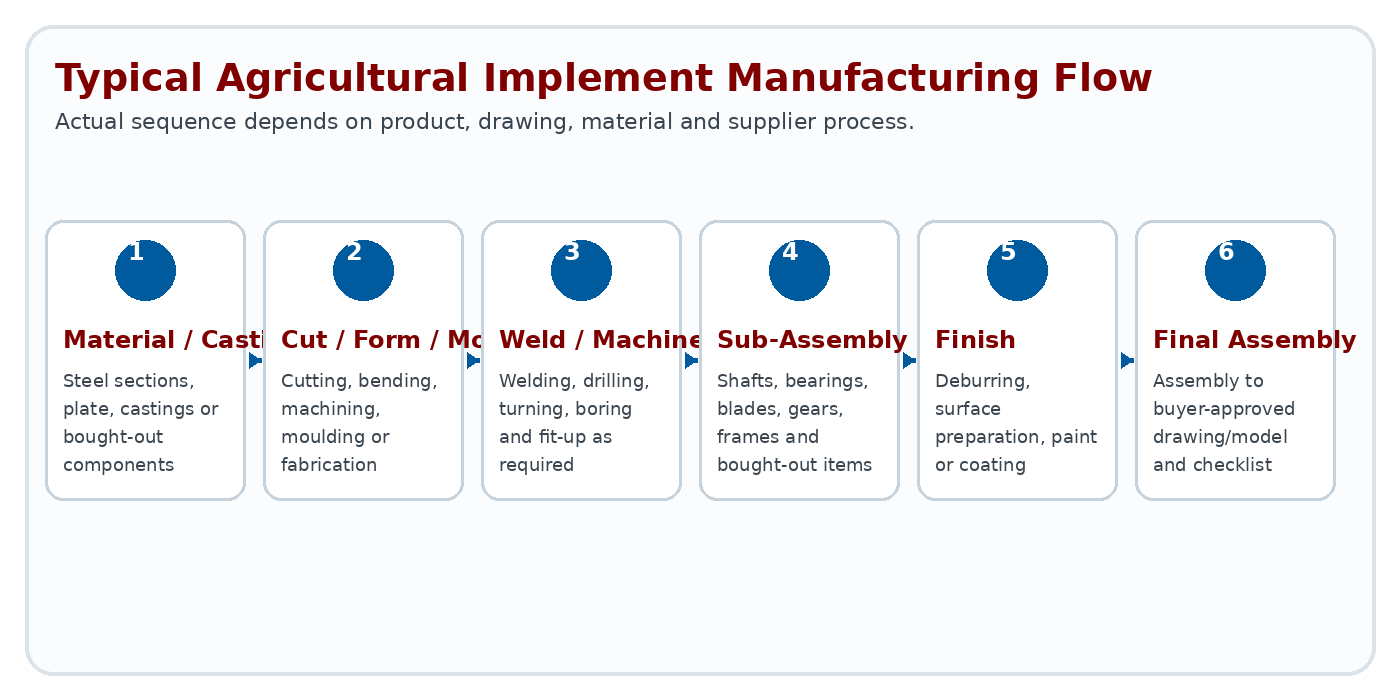
There is no single manufacturing route for every agricultural machine. A cast housing, fabricated cultivator frame and assembled chaff cutter use different operations. The common approach is to verify the route against the released drawing/BOM and supplier process.
Foundry / Cast Component Route
Pattern or sample review → mould/core preparation → melting/pouring → shakeout/cleaning → fettling → machining where required → dimensional/material checks → finishing.
Fabricated Implement Route
Material identification → cutting/forming → drilling/machining → welding and fixture control → sub-assembly → surface preparation/paint → final assembly.
Bought-Out Parts Matter as Much as the Frame
Bearings, seals, fasteners, blades, shafts, gears, belts, chains, tyres, motors/gearboxes and other purchased components can decide machine reliability. The approved BOM should identify the required make, grade or acceptable equivalent whenever these details matter.
- Supplier and source of critical bought-out parts
- Part number / make / grade confirmation
- Traceability where specified
- Subcontracted heat treatment or coating
- Assembly fit and interference checks
- Replacement/spare parts packed with shipment
Manufacturing Follow-up Starts With Released Documents
Send the approved drawing/BOM, sample, inspection plan and any critical process requirement.