




Compare Suppliers on the Same Specification
The first job is to remove ambiguity. Define feedstock, finished-product expectations, packing, testing and shipment assumptions before comparing supplier prices.
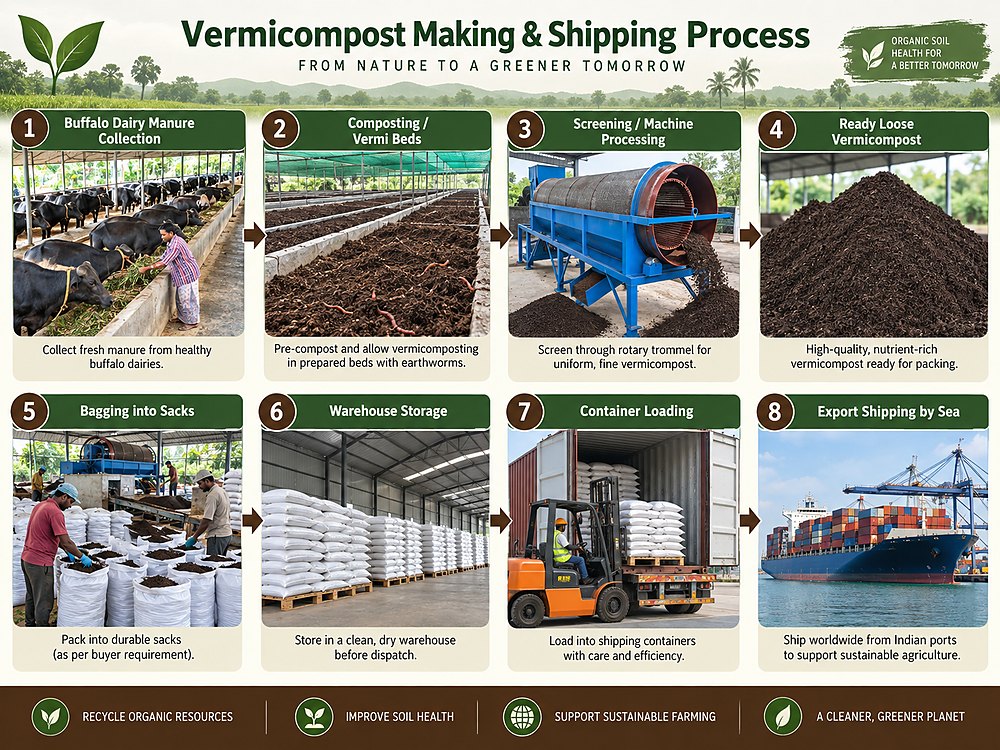
Illustrative process image. Actual supplier equipment and facility configuration are verified during sourcing/audit.
RFQ Checklist for Buffalo-Based Vermicompost
- State clearly: buffalo-manure based vermicompost
- Destination country and intended use
- Total order quantity and shipment plan
- Loose bulk or bagged supply
- Bag net weight, material, printing/label and closure requirement
- Appearance, maturity/odour expectation and visible foreign-matter requirement
- Moisture requirement or test method, if important
- Screen/sieve or particle-size expectation
- Any pH, organic carbon, nutrient, pathogen, heavy-metal or other lab parameters required by buyer/destination
- Required certificates/documents, only where applicable to destination/contract
- Incoterm, port, palletisation or container-loading instruction
Ask to See the Actual Source and Process
A buyer can reduce ambiguity by requesting source and production evidence before commercial approval. The useful questions are practical: where does the feedstock come from, how is it conditioned, how are vermi-beds managed, how is finished material separated/screened, and where is packed stock stored?
For larger or repeat programs, supplier evaluation should look at the real production arrangement rather than rely on catalogue photographs.
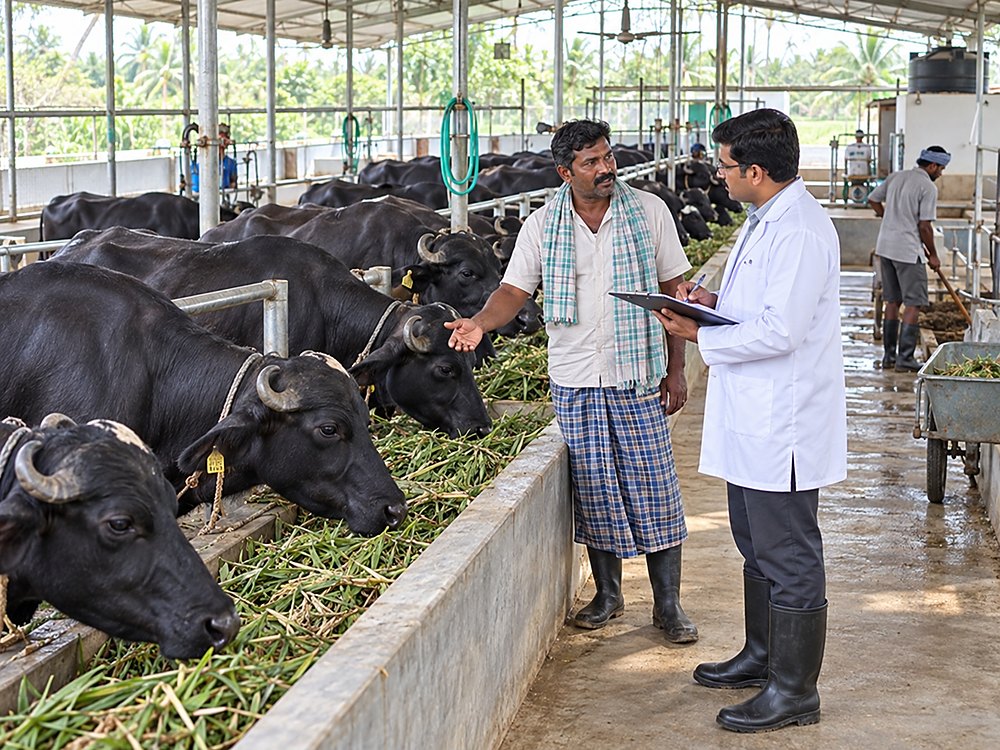
Illustrative source-inspection view.
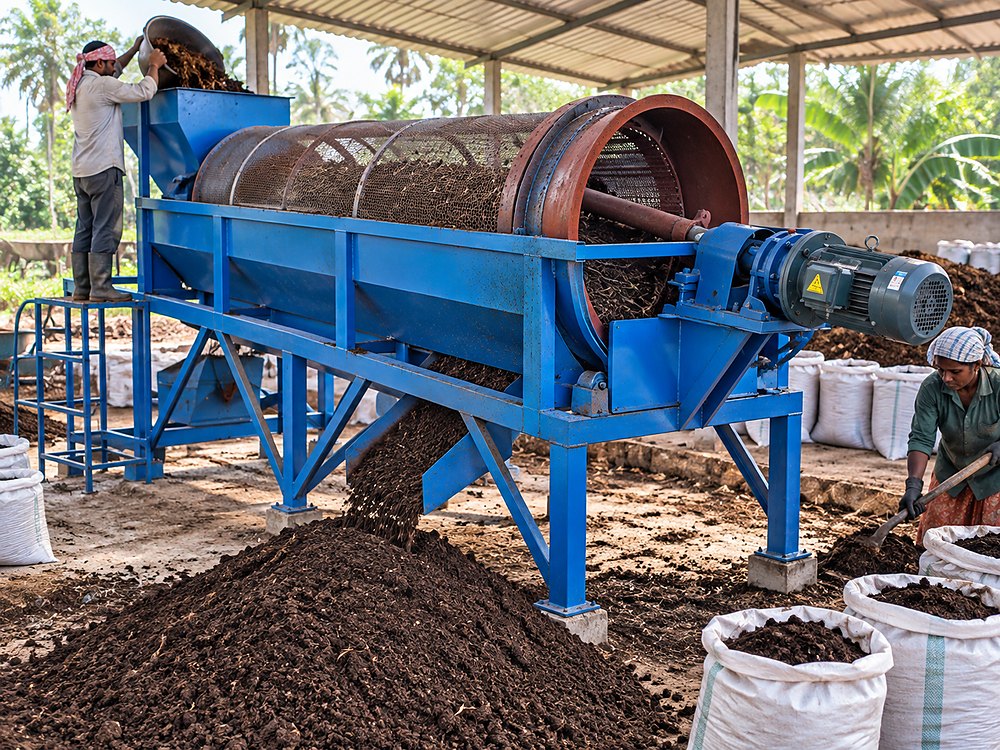
Illustrative screening scene; actual equipment and screen size vary by supplier.
Define “Ready Vermicompost” in Writing
Colour alone does not define an acceptable shipment. The buyer's approval should combine a representative sample with measurable or inspectable requirements. Depending on the program, these may include maturity, smell, moisture, screened presentation, foreign matter, packing and agreed laboratory values.
Research from ICAR on compost/vermicompost processing also illustrates why moisture management, maturity and mechanical screening are important process controls, although exact methods and values vary with feedstock and production system.
Plan Packing Before Production Finishes
Bag size, material, artwork, net-weight tolerance and sealing method affect quotation and production planning. Export buyers should also specify whether bags will be floor-loaded, palletised or handled under another agreed loading plan.
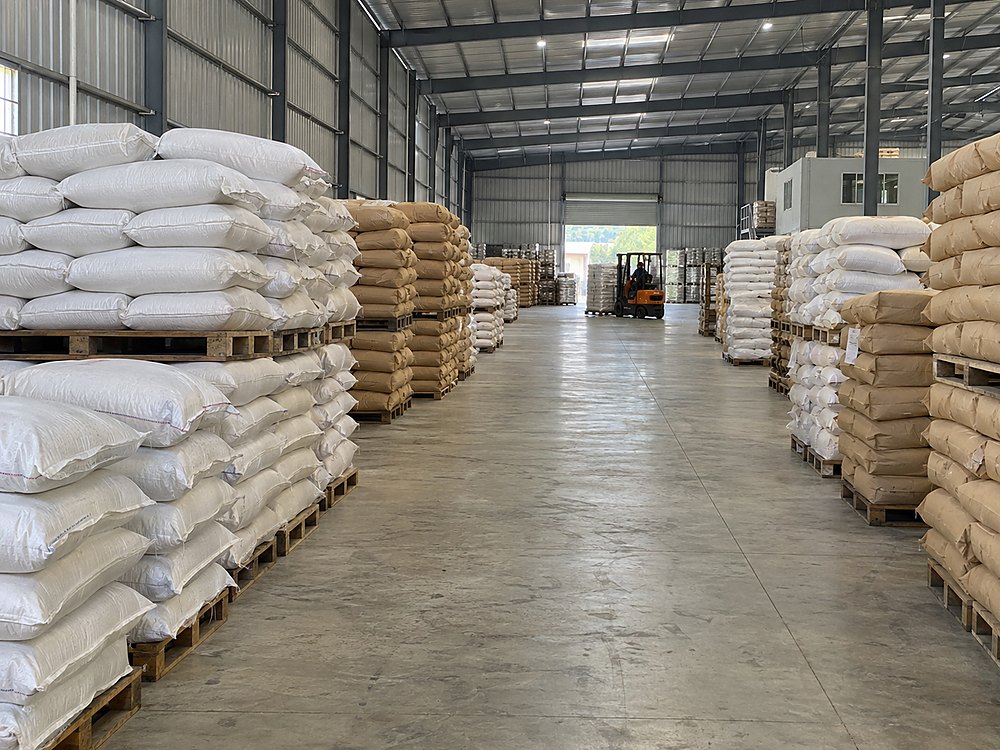
Illustrative warehouse-stock view.
From Requirement to Shipment
Illustrative workflow. Actual process steps, equipment and regulatory documents are supplier/destination specific.
Buyer Guide FAQs
What should an international buyer put in a vermicompost RFQ?
State buffalo-manure based feedstock, intended use, destination, required quantity, loose or bagged supply, bag size/marking, moisture expectation, particle-size/screening requirement, test parameters, documents and delivery terms.
Should nutrient values be assumed from a supplier brochure?
No. If nutrient, organic-carbon, pH, pathogen, heavy-metal or other parameters matter to the order, put the required test method and acceptance criteria in writing and use an agreed laboratory/sample procedure.
Is a photo enough to approve vermicompost?
No. Appearance can help, but a representative sample, written specification and agreed testing/inspection plan are more reliable than photographs alone.
Can private-label bags be arranged?
Private-label or buyer-marked packing can be discussed with suppliers, subject to bag-printing quantities, artwork approval and the commercial terms of the order.
Send Your Vermicompost Requirement
Share destination country, intended use, quantity, preferred packing, required test parameters and any destination-specific documents so suppliers can be compared on the same basis.