




Source the Finished Product, Not Just a Price
For international buyers, a vermicompost quotation is useful only when the feedstock, maturity, screening, moisture expectation, packing, testing and shipment assumptions are clear. We coordinate the sourcing process around a written buyer specification.
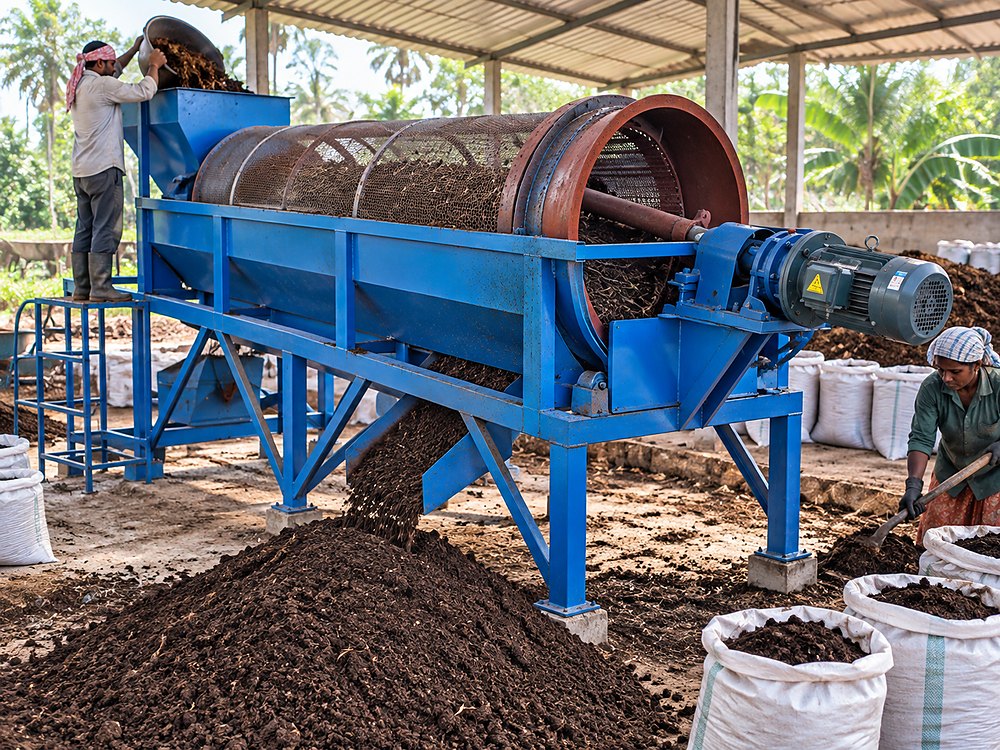
Illustrative process image. Actual supplier equipment and facility configuration are verified during sourcing/audit.
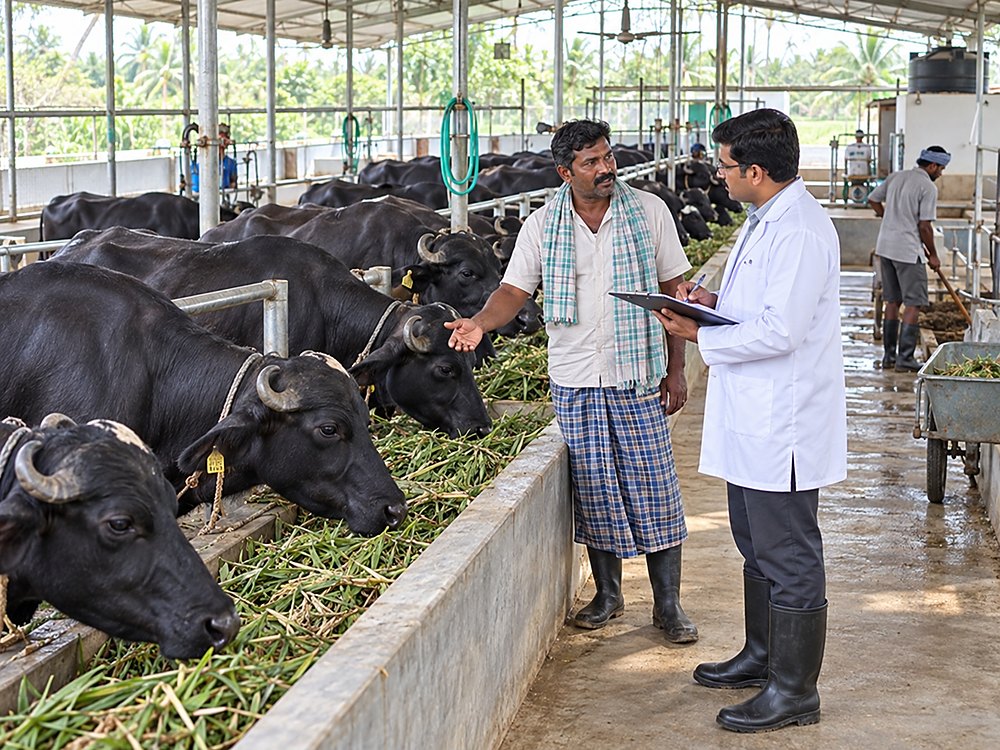
Illustrative source-inspection view. Supplier/source is verified for the actual order.
Start With the Feedstock Source
For this category, the requirement is specifically buffalo-manure based vermicompost. Supplier evaluation should therefore begin with the actual feedstock source, handling method, contamination controls, vermicomposting process and the supplier's ability to keep batches consistent.
- Confirm buffalo-manure based feedstock for the offered product
- Review storage and handling of incoming organic material
- Check separation from unwanted waste and foreign matter
- Review vermi-beds, moisture management and batch handling
- Confirm traceability or batch identification where the buyer requires it
Typical Sourcing Flow
Buffalo-manure based organic material is collected and conditioned/pre-composted as required by the producer's process before worms are used.
Earthworms work through the conditioned material under managed moisture and environmental conditions until the material reaches the producer's maturity target.
Mature material is separated, screened or sieved to the agreed particle-size presentation and checked for visible foreign matter.
A representative sample is compared with the buyer's specification. Laboratory testing is arranged only for agreed parameters or destination requirements.
Product is packed in the agreed bag format or prepared for bulk handling and held in a clean, dry storage area before dispatch.
Bag count, markings, visible bag condition, container condition and loading arrangement can be checked before dispatch.
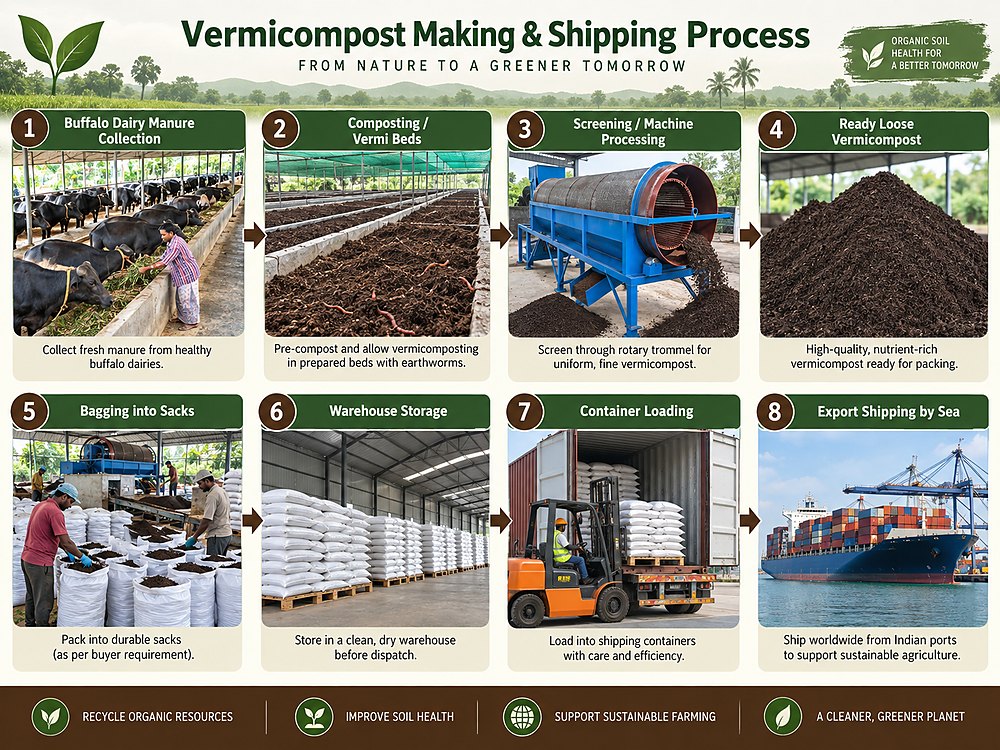
Illustrative workflow chart. Exact production sequence and equipment vary by producer.
Ready Material: Screening Matters
A buyer looking at finished vermicompost normally wants a consistent, mature and usable product—not unprocessed manure. Screening helps control visible oversize material and presentation. The exact sieve/particle-size requirement should be written into the RFQ instead of assumed.
Mechanical screening equipment varies widely by production scale. The supplier's actual machine, screen size and output should therefore be photographed or verified during supplier evaluation rather than inferred from a generic machine image.
Illustrative trommel-screening scene; actual supplier machine must be verified.
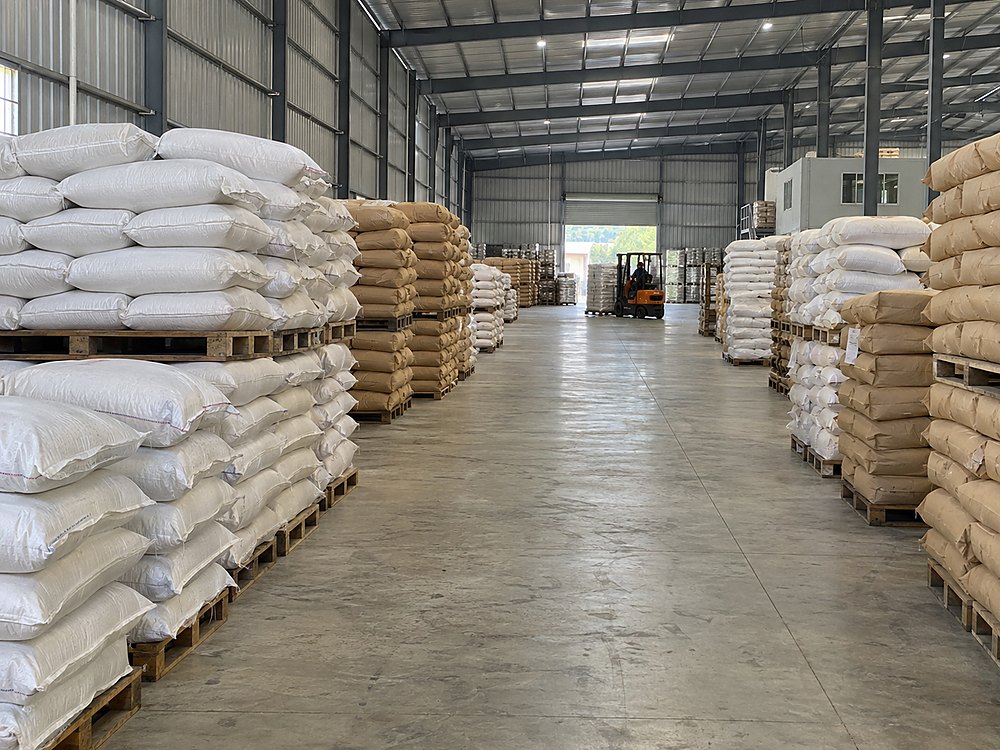
Illustrative packed-stock warehouse scene.
Packing and Warehouse Readiness
Before shipment, the buyer should define bag material, net weight, artwork/marking, stitching or sealing method, pallet requirement if any, and storage expectations. Packed stock should remain protected from rain, standing water and obvious contamination.
- Approved bag artwork and markings
- Agreed net-weight tolerance
- Clean, intact sacks and secure closure
- Lot/batch marking where required
- Dry storage and orderly stock segregation
Container Loading Is the Last Control Point
For export shipments, loading supervision can verify that the visible cargo, bag count/lot, container condition and loading arrangement match the buyer's released shipment instructions before the doors are closed.
Destination import rules, fumigation, phytosanitary treatment, organic certification or other documents are not assumed. They should be confirmed for the buyer's destination and contract before shipment.
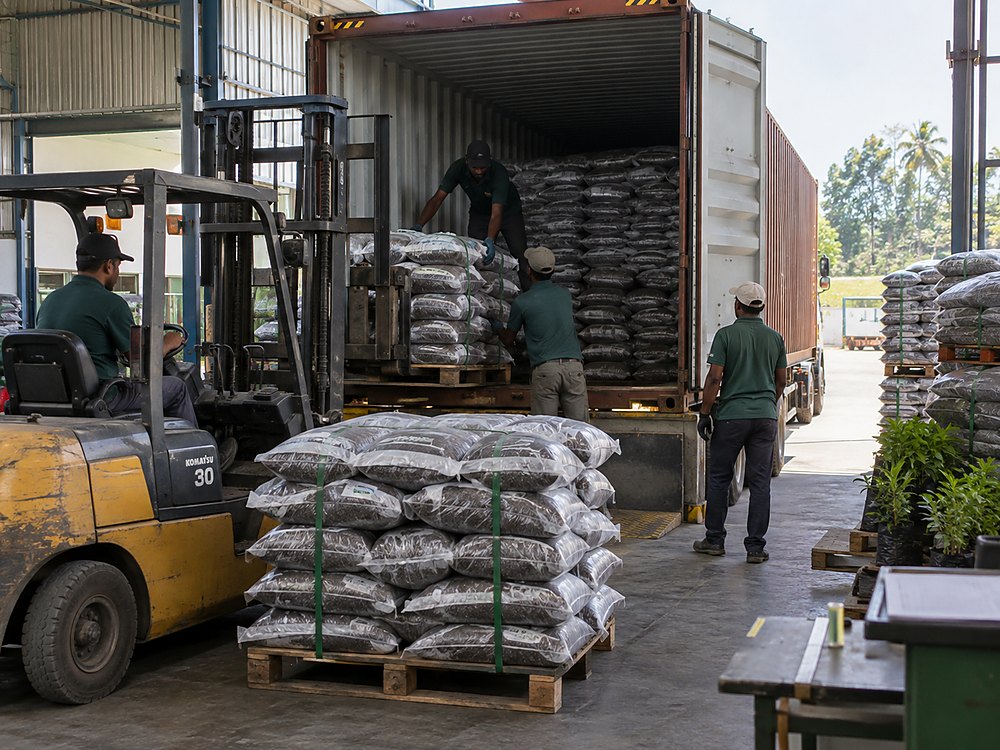
Illustrative container-loading scene.
Buffalo Vermicompost FAQs
What does buffalo-based vermicompost mean on this page?
Our sourcing brief is limited to vermicompost made from buffalo-manure based feedstock. The supplier's actual feedstock and process should be confirmed during supplier evaluation and sampling.
Can loose and bagged vermicompost both be sourced?
The sourcing brief can cover loose bulk material or buyer-specified bagging, subject to supplier capability, destination requirements and shipment economics.
What should be approved before an order?
Approve a representative sample and written specification covering feedstock statement, appearance, maturity/odour expectations, moisture, particle size or screening, packing, lab tests where required and shipment documentation.
Can Consou inspect loading?
Container loading supervision can check the agreed bag count, visible bag condition, markings, container condition and loading arrangement against the buyer's instructions.
Send Your Vermicompost Requirement
Share destination country, intended use, quantity, preferred packing, required test parameters and any destination-specific documents so suppliers can be compared on the same basis.